
You found a beautiful saree or kurta set for a big event. But when it arrives, it doesn’t fit right. This turns your excitement into frustration.
Don’t let a bad fit ruin your day. This guide makes picking the right size easy. You’ll know exactly what to do with every ethnic clothing size chart.
Traditional clothes vary a lot. Our guide helps you find the perfect fit. Feel beautiful and comfortable in every outfit.
Learn how to measure your body right. This way, you won’t get disappointed. Lehengas and salwar suits can be tricky. We make it clear so you can shop with confidence.
Key Takeaways
- Measure your body accurately for precision.
- Compare brand charts before making purchases.
- Factor in fabric stretch and movement.
- Prioritize bust and hip dimensions specifically.
- Review style-specific guidelines for better fit.
- Account for potential tailoring needs for custom looks.
1. Understanding Ethnic Wear Sizing Standards in India
Indian ethnic wear sizing standards are different. It’s important to know these differences. First, we need to understand the sizing standards.
Differences Between Western and Indian Sizing
Indian ethnic wear sizing is not the same as Western sizes. For example, an Indian size ‘M’ is not the same as a Western medium. Indian clothing is more loose-fitting and comfy, fitting many body types and preferences.
Indian sizes think about fabric draping and comfort. This changes how clothes fit. A salwar kameez is loose for comfort, while a Western dress hugs the body.
Regional Variations in Ethnic Clothing Measurements
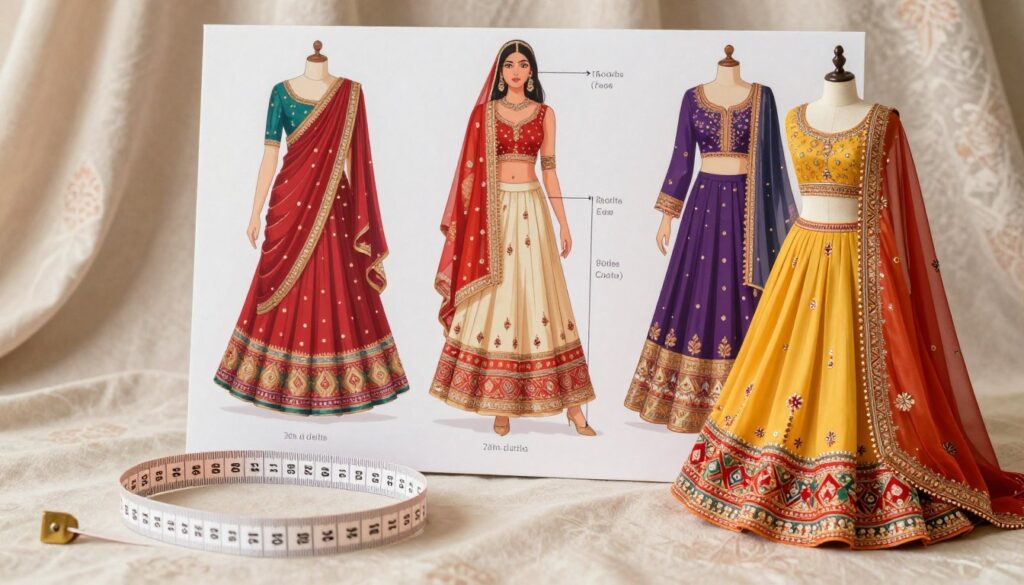
India is diverse, with different regions having their own sizing. For example, South Indian clothes are different from North Indian ones. This is because of body types and cultural likes.
Regional differences also affect how clothes are made. Some like clothes to fit tight, while others prefer loose. Knowing these differences helps pick the right size in ethnic wear.
2. Essential Body Measurements You Need to Know
To fit ethnic wear perfectly, knowing your body measurements is key. Getting your measurements right helps pick the right size. This makes your traditional outfits comfy and boosts your confidence.
How to Measure Your Bust Correctly
Measuring your bust right is important for tops, blouses, and dresses. Wrap a flexible tape around your torso, keeping it level. Make sure it’s snug but not too tight, over your bust’s fullest part. Don’t let the tape be too loose or too tight for accurate measurements.
Stand straight with your arms by your sides for the best measurement. Don’t wear thick or padded bras. They can add inches. Think about the bra you’ll wear with the garment for the best fit.
Taking Accurate Waist and Hip Measurements
Waist and hip measurements are key for lower clothes like salwars, lehengas, and skirts. Wrap the tape around your waist’s narrowest part, just above your belly button. For hips, measure around the fullest part, 7-9 inches below your waist.
Keep the tape level and parallel to the floor for both. Wearing undergarments helps get accurate readings.
| Measurement | Description | Tips |
|---|---|---|
| Bust | Around the fullest part of the bust | Keep the tape snug but not tight |
| Waist | Around the narrowest part of the natural waistline | Measure just above the belly button |
| Hips | Around the fullest part of the hips | Measure 7-9 inches below the waistline |
Measuring Shoulder Width and Arm Length
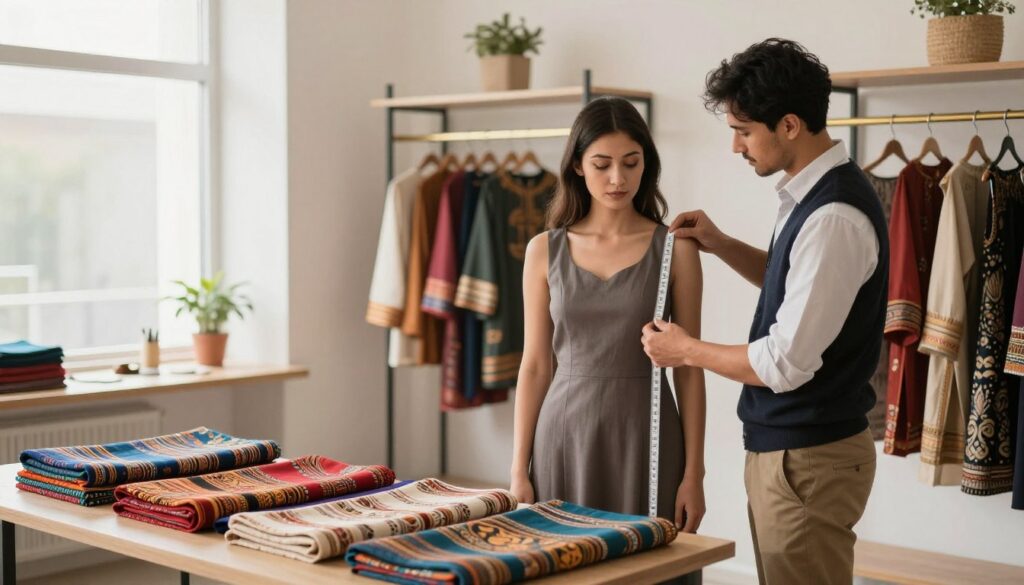
For clothes with sleeves, like kurtas and lehengas, measuring shoulders and arm length is crucial. Place the tape at one shoulder’s edge and stretch it to the other’s edge for shoulder width.
For arm length, measure from shoulder to elbow to wrist bone. Keep your arm slightly bent for a comfy fit.
Recording Your Height for Full-Length Garments
Your height is key for full-length clothes like anarkalis and floor-length kurtas. Stand straight against a wall without shoes. Have someone mark the top of your head on the wall. Measure from the floor to this mark for your height.
Knowing your height helps pick the right length for your garment. This ensures it’s not too long or too short.
3. Tools and Techniques for Accurate Self-Measurement
To get the perfect fit in ethnic wear, learning to measure yourself is key. Getting your measurements right is crucial. It helps whether you’re shopping online or in a store.
Using a Measuring Tape Properly
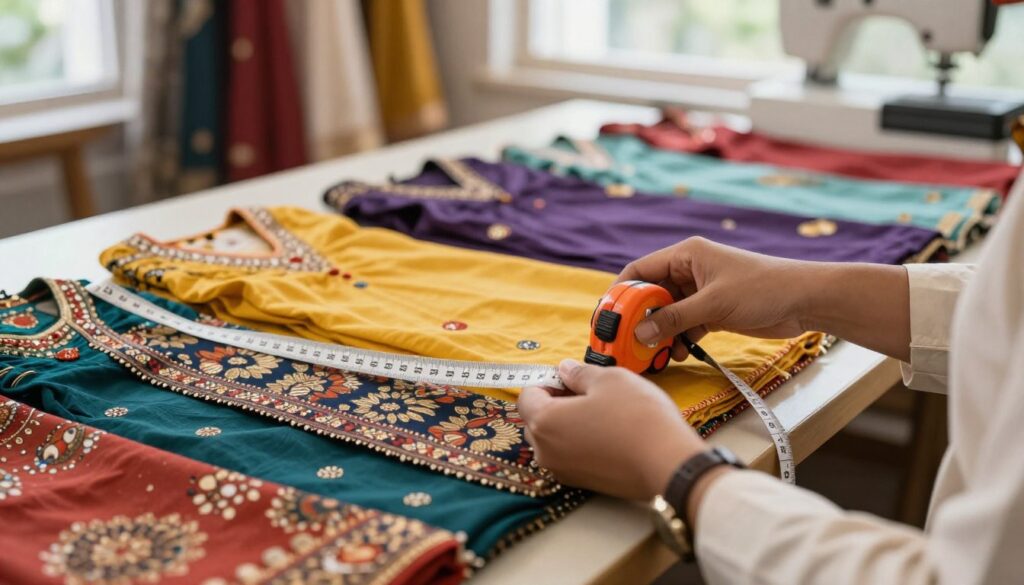
You’ll need a flexible measuring tape. Make sure it’s not too tight or too loose. Stand in front of a mirror to get it right.
When you measure, keep the tape straight and level. For example, when measuring your bust, put the tape across the fullest part. This is usually where your nipples are.
Best Practices for Consistent Measurements
Being consistent is important when you measure. Here are some tips:
- Measure at the same time every day, like in the morning.
- Wear the same clothes for each measurement.
- Make sure the tape isn’t twisted or too tight.
- Take several measurements to check if they’re right.
| Measurement Type | Tips for Accuracy |
|---|---|
| Bust | Measure around the fullest part, keeping the tape level. |
| Waist | Measure around the narrowest part, usually above the belly button. |
| Hips | Measure around the fullest part, usually 7-9 inches below the waist. |
When to Seek Professional Measurement Help
While measuring yourself is easy, sometimes you need a pro. If you’re not sure about your measurements or buying a tricky garment like a lehenga or saree, get a pro to measure you.
Many stores offer free measurements. Use these to get it right, especially when shopping online or trying a new brand.
4. Decoding Ethnic Clothing Size Charts
Finding the right size in ethnic clothing can be tricky. But, knowing how to read size charts is key. It helps you pick the perfect fit.
Standard Indian Size Labels (S, M, L, XL, XXL)
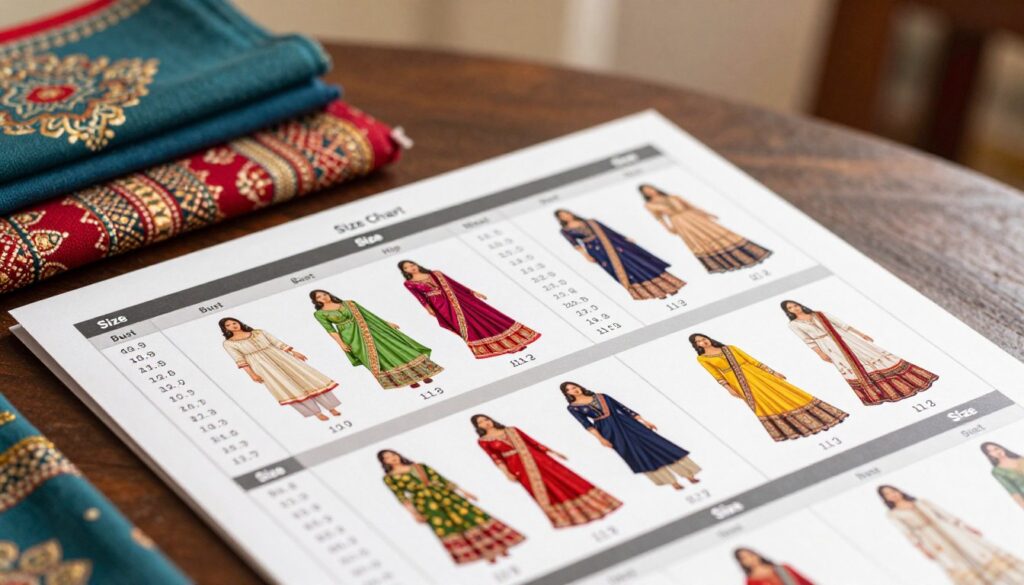
Indian clothes often have sizes like S, M, L, XL, and XXL. But, these sizes can change between brands. To get the right fit, learn the size chart of the brand you’re buying from.
Always check the measurements for each size. These can be very different between brands.
For example, a size M can mean different things in different brands. This can cause fit problems if not checked. So, always look at the brand’s size chart before buying.
Numeric Sizing Systems (32, 34, 36, 38, etc.)
Some brands use numbers like 32, 34, 36, etc. for sizes. These numbers match body measurements, like bust or waist size. Knowing what each number means is very important for picking the right size.
For example, size 34 might mean a 34-inch bust. When using numbers, make sure to measure yourself right. Then, match those measurements with the brand’s size chart.
Custom and Free-Size Options Explained
Some brands offer custom or free-size options. Custom sizes let you give your exact measurements for a perfect fit. This is great if regular sizes don’t work for you.
Free-size clothes are made for different body types. But, free-size doesn’t mean it fits everyone. Always check what “free-size” means for you in terms of measurements.
5. How to Choose the Right Size in Ethnic Wear for Salwar Kameez
Choosing the right Salwar Kameez size is key for a perfect fit. The Salwar Kameez has three parts: the Kameez, Salwar, and Dupatta. Each part needs careful thought for a good fit.
Selecting the Perfect Kameez Size
The Kameez is the top part. Its fit is very important for looking good. You need to think about a few things when picking the right Kameez size.
Kurta Length Considerations
The Kameez length can be hip-length, knee-length, or longer for Anarkali styles. Think about your height and the look you want.
Sleeve Length and Style Options
Sleeve length matters a lot. You can choose from short to full sleeves, or even bell sleeves. Make sure the sleeves are comfy and fit right.
Choosing Salwar and Churidar Bottoms
The Salwar or Churidar is the bottom part. Its fit is as important as the Kameez. Think about the fabric, comfort, and style you like. Salwars are loose, while Churidars are fitted and need stretchy fabric.
Dupatta Size and Draping Requirements
The Dupatta is a key part of the Salwar Kameez. It should be long enough to look good draped over your shoulders or body. A standard Dupatta size is about 2.25 meters long, but it can change based on how you like to drape it.
By thinking about each part’s size, you can get a Salwar Kameez that looks great and feels comfy.
6. Sizing Guide for Sarees and Blouses
Wearing a saree is more than just draping it right. It’s also about picking the right size for the saree and blouse. A good fit can boost your confidence and elegance.
Standard Saree Lengths and Widths
Sarees vary in length and width. Knowing these standards helps you choose the right size. A saree is usually 5.5 to 9 yards long. Its width is about 44 inches, but it can change.
- Length: Saree length changes with type and region. A standard saree is 5.5 yards long. But, styles like Assamese or Bengali sarees can be longer.
- Width: Width is usually the same, but check it, especially when buying online.
Blouse Measurement and Fitting Tips
A blouse that fits well is key to matching your saree. Here are tips for measuring and fitting your blouse.
Bust and Shoulder Measurements for Blouses
Getting the right measurements is important for a comfortable and stylish fit.
- Bust Measurement: Measure around your bust’s fullest part. Keep the tape level and parallel to the floor.
- Shoulder Measurement: Measure across your back from one shoulder tip to the other. Make sure the tape is straight and not too tight.
Blouse Length and Back Design Considerations
The length and design of your blouse matter a lot.
- Blouse Length: Think about your body type and the saree style. A longer blouse offers more coverage, while a shorter one shows more.
- Back Design: The back design adds elegance. Choose between simple or intricate designs based on your saree and style.
By focusing on these details, you can find the perfect fit in ethnic wear. This ensures you look and feel amazing in your saree and blouse.
7. Finding Your Perfect Fit in Lehengas and Ghagras
Choosing the right lehenga or ghagra is more than picking a design. You need to know your measurements and the garment’s size. Lehengas and ghagras are detailed pieces of Indian wear. They need careful attention for a perfect fit.
Lehenga Skirt Sizing Guidelines
For a comfy and stylish fit, knowing the lehenga skirt’s size is key. Its size depends on waist measurements and flare options.
Waist Measurements and Flare Options
Getting your waist right is crucial for a good fit. Measure around your natural waistline to find the right size. The skirt’s flare also matters, from A-line to full flare.
Length Selection Based on Height
The lehenga’s length is important too. Taller people might like longer lehengas for balance. Shorter lengths are better for petite women. Lehengas are usually 40 to 42 inches long, but you can get custom lengths.
Choli Sizing for Lehenga Sets
The choli, or blouse, is key in a lehenga set. It must fit well for comfort and style. Take your bust measurements to pick the right choli size. Think about the style and fabric too; some cholis fit tight, others are looser.
Coordinating Your Complete Lehenga Ensemble
Putting together a lehenga set is more than matching sizes. It’s about looking good together. Think about the dupatta’s size and how it will fall with your lehenga and choli. A well-coordinated look boosts your confidence and beauty.
By focusing on these details and picking the right sizes, you’ll get a perfect fit. This will make you stand out at any event.
8. Selecting Sizes for Anarkalis and Long Kurtas
Choosing the right size for Anarkalis and long kurtas is key. It affects how you look and feel. These ethnic wear pieces need careful sizing for the best look and comfort.
Determining the Right Anarkali Length
The length of an Anarkali is very important. Anarkalis are usually 48 to 60 inches long. Think about your height and the event. Taller women can wear longer Anarkalis, while shorter women might prefer shorter ones.
Also, think about what you’ll wear with your Anarkali. Make sure the length matches your leg and heel height. This helps you look balanced.
Flair and Panel Considerations
The flair and number of panels matter too. A well-flared Anarkali looks amazing. But too much flare can be too much. Anarkalis have 12 to 16 panels, and more panels mean more flair.
Think about your body type when picking flair. Petite frames look good with less flare. Taller or curvier people can pull off more flair.
Bottom Wear Coordination
Choosing the right bottom wear is key for a complete look. Leggings, churidar, or straight pants work well. Make sure your bottom wear is comfy and fits right. It affects how your outfit looks and feels.
- Leggings or churidar are great with Anarkalis for a sleek look.
- For long kurtas, try leggings, jeggings, or straight jeans for a casual vibe.
By thinking about these points, you can pick the perfect ethnic wear. You’ll feel confident and comfy in your outfit.
9. Size Selection for Indo-Western Fusion Wear
Exploring Indo-Western fusion wear means knowing about sizes. It’s important to look good and feel comfy. This style mixes Indian and Western fashion, making a unique look.
Palazzo and Dhoti Pant Sizing
Palazzo and dhoti pants are key in Indo-Western wear. Think about your waist and hips when picking a size. Palazzo pants are comfy and flowy, so pick a waistband that feels right and a length that fits your height.
Dhoti pants have different styles and fabrics. Some fit tight, others are loose. Measure your waist and from waist to ankle to find the right size.
| Size | Waist Measurement (inches) | Hip Measurement (inches) | Length (inches) |
|---|---|---|---|
| S | 28-30 | 36-38 | 40 |
| M | 32-34 | 40-42 | 41 |
| L | 36-38 | 44-46 | 42 |
Cape and Jacket Measurements
Capes and jackets add style to your outfit. Think about your shoulders and bust when picking one. Make sure it fits well and moves easily.
Key measurements for capes and jackets include:
- Shoulder width
- Bust circumference
- Length from shoulder to desired hemline
- Sleeve length (if applicable)
Tunic and Kurti Length Selection
Tunics and kurtis are great for Indo-Western outfits. Look at your bust, waist, hips, and length preference. Tunics can be hip-length or floor-length. Kurtis are usually knee-length or longer. Choose a size that fits well and looks good on you.
Tips for choosing the right tunic or kurti length:
- Consider your height and body proportions
- Think about the occasion and your personal style
- Pair the tunic or kurti with appropriate bottom wear
10. Common Fit Problems and How to Fix Them
Even though ethnic clothing is beautiful, fit issues can be a problem. You might face issues with a salwar kameez, saree, or lehenga. But, knowing how to fix these problems can really help.
Dealing with Tight or Loose Bust Areas
A good fit in the bust area is key for comfort and style. If your top is too tight, you might need to let it out or pick a different size. If it’s too loose, you can take it in or add darts for a better fit.
- For tight bust areas, look for tops with adjustable or elasticized components.
- If the garment is too loose, consider adding darts or taking it to a tailor for alterations.
Adjusting Waist and Hip Fit Issues
Waist and hip fit problems are common in ethnic wear, like lehengas and salwar kameez. You can fix these by:
- Taking in or letting out the waistband for a more comfortable fit.
- Adjusting the flare or width of the garment to better suit your body shape.
Solving Sleeve and Shoulder Problems
Ill-fitting sleeves and shoulders can really affect how your ethnic wear looks. To solve these problems:
- Check if the garment has adjustable sleeves or consider tailoring adjustments.
- For shoulder fit issues, ensure the garment is not too tight or too loose across the shoulder area.
Hemming and Length Alterations
Length alterations are often needed for the perfect fit. Whether it’s a kurta, salwar, or lehenga, hemming can make a big difference.
To hem your ethnic wear correctly:
- Measure the desired length carefully.
- Use a tailor or follow DIY hemming tips to achieve a professional finish.
11. Smart Shopping Tips for Online Ethnic Wear Purchases
Shopping for ethnic wear online can be tough. But, with smart tips, you can find the perfect fit. You need to pay close attention to your measurements and what you like.
Reading Product Descriptions and Size Guides Carefully
Start by reading product descriptions and size guides well. Look for measurements, fabric details, and fit notes from the seller.
Check the size charts and compare them with your measurements. Many sites have size guides that match standard body measurements. This helps you pick the right size.
Checking Return and Exchange Policies
Before buying, check the return and exchange policies. Know how to return or exchange items that don’t fit.
Look for sites that offer free returns or exchanges. They should have clear, easy policies. This makes buying ethnic wear online safer.
Reading Customer Reviews for Fit Feedback
Customer reviews are very helpful when shopping online. Look for feedback on fit, fabric, and quality.
Focus on reviews from people with similar body types or fit needs. This helps you guess how the garment will fit you.
Ordering Multiple Sizes When Uncertain
If you’re not sure about your size or the garment’s fit, order multiple sizes. Many sites let you return items that don’t fit. So, ordering multiple sizes ensures you get the right fit.
Just make sure to check the return policy first. Understand any costs or rules for returning multiple items.
12. Conclusion
Choosing the right size in ethnic wear makes you look great and feel good. Knowing how to use ethnic clothing size charts helps a lot. It makes sure you get a perfect fit every time.
This guide taught you about sizing differences in ethnic wear. Things like where you buy it, what it’s made of, and its type matter. Always check the size charts from brands like FabIndia or W for Women. If you’re unsure, ask customer service for help.
With time, you’ll get better at picking the right size. Whether it’s a salwar kameez, saree, or lehenga, being informed is key. Take your time to find the best fit.